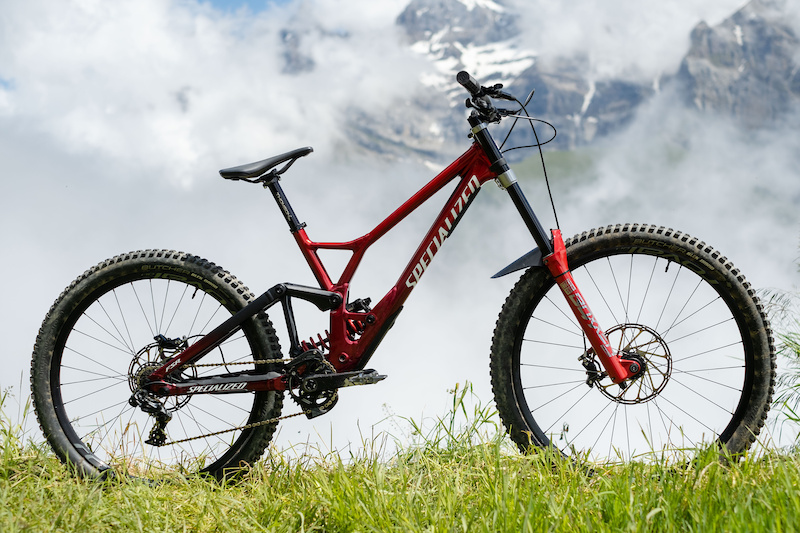
The Demo platform was given quite the revamp a couple of years ago with a drastic move away from the company’s old ideals of low progression and activeness being swept away with the onset of increased progression and combating of load transfer. It actually took me quite by surprise, as it was such a drastic change compared to their previous bikes and it’s something that’s carried through with the Enduro and now their current generations of bikes. Thumbs up Specialized.
The latest Demo Race takes the same layout that the drastically changed bike had in its full 29” guise, with the most noticeable change from afar being that smaller back wheel.
The Demo Race, and the whole Demo platform for that matter, is now a full aluminum construction. But focussing in a bit more, there’s adjustable chips on the Horst pivot that allow this Demo to accommodate either a dual 29" wheel setup, or the 29" front / 27.5" rear configuration.
While that makes for quite the geometry table, it’s also a pretty ambitious move from Specialized, with the difference in outside diameter of the wheels being as much as 40mm in some cases. A DH bike does have more in-built adjustability from the adjustable fork length granted by the dual crowns, but it’s still a lot for a single bike to achieve. The mullet setup, that the bike arrives with, has the chips set in the short position and that setup can also use the middle setting. Full 29” setups can only run the middle and long settings on the chips.
Jumping into more of the details, it’s clear to see that Specialized has been doing bikes for a long time, with lots of the small details being considered and pretty solid. Their frame protection is mostly bolt on, bar some small stick-on bits at either end of the chain stay and on the underside of the seat stay. That chain stay protector design, with its hollow protrusions, doing a fantastic job. It wraps tightly around the chain stay tube and even bolts to the pivot bolt on the chain stay. The down tube protector is a wide-coverage bolt on affair and there’s even an additional stick-on shuttle guard included that also works brilliantly for some bike park lifts.
There are however, a few details missing that I didn’t realise how much I’d taken them for granted. It’s now commonplace to see integrated fork bumpers in the downhill frames, more often than not doubling up as the entry for the cables into the frame. But there are none on the Demo and I’d forgotten the woes of wrestling with them on the fork stanchions for fork swaps.
The frame itself is another showing of Specialized’s competencies - aluminum construction. That head tube being only a taster, as the heavily formed tubes in both the front and rear triangles are devoid of any sharp edges that would come into constant contact with the rider’s legs or shoes. And the forgings that go into making the belly of the bike are pretty damn intricate and engineered. It does make for a lot of overlapping frame parts, and the potential for mud collection spaces, but the underside of the bottom bracket does have a big opening to jettison crud as well as it can.
Those intricate forgings around the shock are pretty tight on space to the spring, so it might be worth checking before you change shocks by doing a quick test fit if you can.
Cable routing is internal out of the box, with Specialized using a more formed head tube to offer the cable entries. Cables pop out of the main frame at different points before entering the chain stays. The brake hosing runs on the outside of the frame, with the gear cable wiggling through the links. Interestingly, there are even provisions on the frame for external brake routing, and the small plastic bolt on parts required to accomplish this are included. It’s a nice touch, as without a doubt some people do prefer the practicality of external routing, while others appreciate the looks of internal.
There are a lot of pivots in the suspension layout that the Demo uses, something that we’ll go into later, and maybe this scared Specialized a bit as they went on to make many of them concentric with one another. It does cut down on the amount, and weight, of hardware though and a lovely touch is that each pivot is sealed with some proper lip seals on all the pivot bolts and washers. It’s nice to dismantle a bike to find the grease still there and clean.
There’s a big formed plastic fender between the wheel and links that does an amicable job of keeping the debris out of the frame but does favour skinny fingers for adjusting the shock rebound. There are, though, some traps on the frame that open up as the suspension is compressed and can trap pretty big pieces of trail in between the frame parts.
There’s an 83mm threaded BB on the Demo and some interesting choices in frame specification, with the use of a 148mm back wheel and 180mm post mount brake standard. While the narrow rear hub makes sense to reduce the overall width of the bike to slither through tight gaps, while also helping out in the spares department if you happened to own a fairly modern trail or enduro bike, the small brake rotor spec is a bit odd and needs fiddly adapters to get the caliper up to the more common 200mm rotors and now even bigger 220mm offerings.
I’m a huge fan of colour, as long as it’s black. But the Demo’s brushed red paint job certainly became a hit with a lot of testers and people. It’s a subjective point, I know, but it’s a good-looking bike.
"Demo" - Google News
February 18, 2021 at 03:05PM
https://ift.tt/2Nhj2EL
Review: 2021 Specialized Demo Race - DH Bike Week - Pinkbike.com
"Demo" - Google News
https://ift.tt/35q1UQ2
https://ift.tt/2Wis8la




No comments:
Post a Comment